Warranty Management
How Diggs Cut Warranty Costs by 30% in 6 Months
"The platform is easy to use and makes processing warranty tickets smooth and efficient. It’s been a huge time-saver for our team, especially with the automated email notifications that keep our customers informed throughout the process. Dyrect has been a valuable tool in helping us streamline our warranty operations and improve customer satisfaction."
TL;DR
- Diggs Pet is a premium pet products brand selling dog crates and accessories through Shopify, retail, and marketplaces.
- Before Dyrect, their warranty process ran across Zendesk, email, spreadsheets, Shopify admin, and internal team chats.
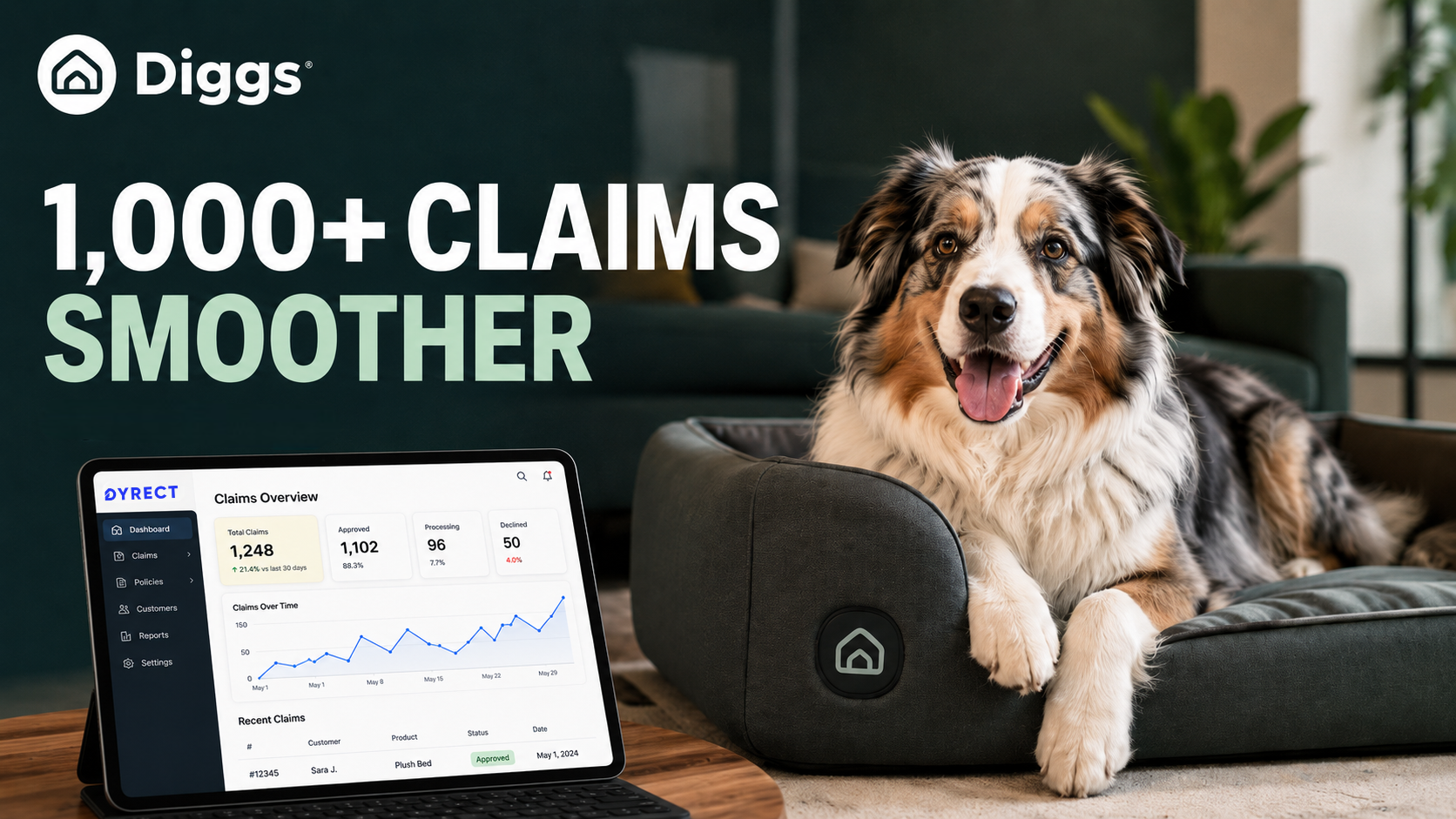
- After switching to Dyrect, they processed 66,000+ warranty registrations and 1,000+ claims in six months, cut warranty operations cost by 30%, and turned warranty data into a product intelligence system that flags recurring issues by SKU.
About Diggs Pet
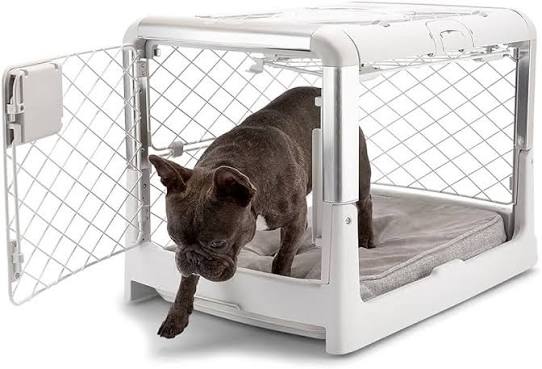
Diggs Pet builds premium dog crates and accessories. Their products, including the Revol and Evolv crates, are designed for pet parents who care about safety, durability, and long-term use.
Because these are high-consideration purchases, customers expect support that matches the product quality. When a crate latch cracks or a tray arrives damaged, the customer is not just filing a ticket. They want proof that the brand stands behind what it sold.
Diggs sells through Shopify, retail partners, and marketplace channels. That multi-channel reality made warranty operations harder at every step, because a customer who bought through Amazon has a completely different data trail than someone who bought on diggs.com.
Five Tools, Zero Visibility, and a Growing Backlog of Claims
Before Dyrect, warranty at Diggs was not one process. It was five processes duct-taped together.
A customer would email about a cracked tray. The support agent would open Zendesk to log the ticket, switch to Shopify to verify the order, check a spreadsheet to confirm warranty eligibility, open email to request photos from the customer, and then message the operations team on Slack to figure out whether to repair or replace.
Every single claim followed this loop. And every single claim required the agent to manually reconstruct context that should have been available in one place.
Three things made this worse as volume grew.
First, claim verification ate hours every week. For each claim, agents had to cross-reference the customer's order data in Shopify, match it against the warranty spreadsheet, review uploaded photos and videos from email, and confirm product details. A claim that should take ten minutes to assess took significantly longer because the information lived in four different systems.
Second, nobody could see where a claim actually stood. There was no shared view of claim status. The support team knew what they had handled. The operations team knew what they had shipped. But connecting those two halves required Slack messages and manual follow-ups.
Third, recurring product issues stayed invisible. Diggs was getting claims about cracked trays, missing parts, shipping damage, and design-related concerns. But because these issues were scattered across Zendesk tickets and email threads, there was no way to see patterns.
What Diggs Needed (And Why Spreadsheets Could Not Get Them There)
The core issue was not that the team was doing a bad job. The issue was that the tooling forced them to do unnecessary work on every single claim.
Diggs needed four things: - A single place where claim data, customer data, product data, and communication history lived together. - A way for customers to submit warranty issues without back-and-forth emails. - Structured tracking for repairs and replacements connected to Shopify. - And visibility into which products were generating the most warranty activity.
Zendesk handled support tickets well, but it was not built for warranty workflows. Spreadsheets tracked eligibility, but they could not connect to orders or customer profiles. Email captured photos and videos, but it buried them in threads. Overall, the tools were fine individually. Together, they created a process where context was always one tab away.
How Dyrect Replaced Five Tools With One Warranty Workflow
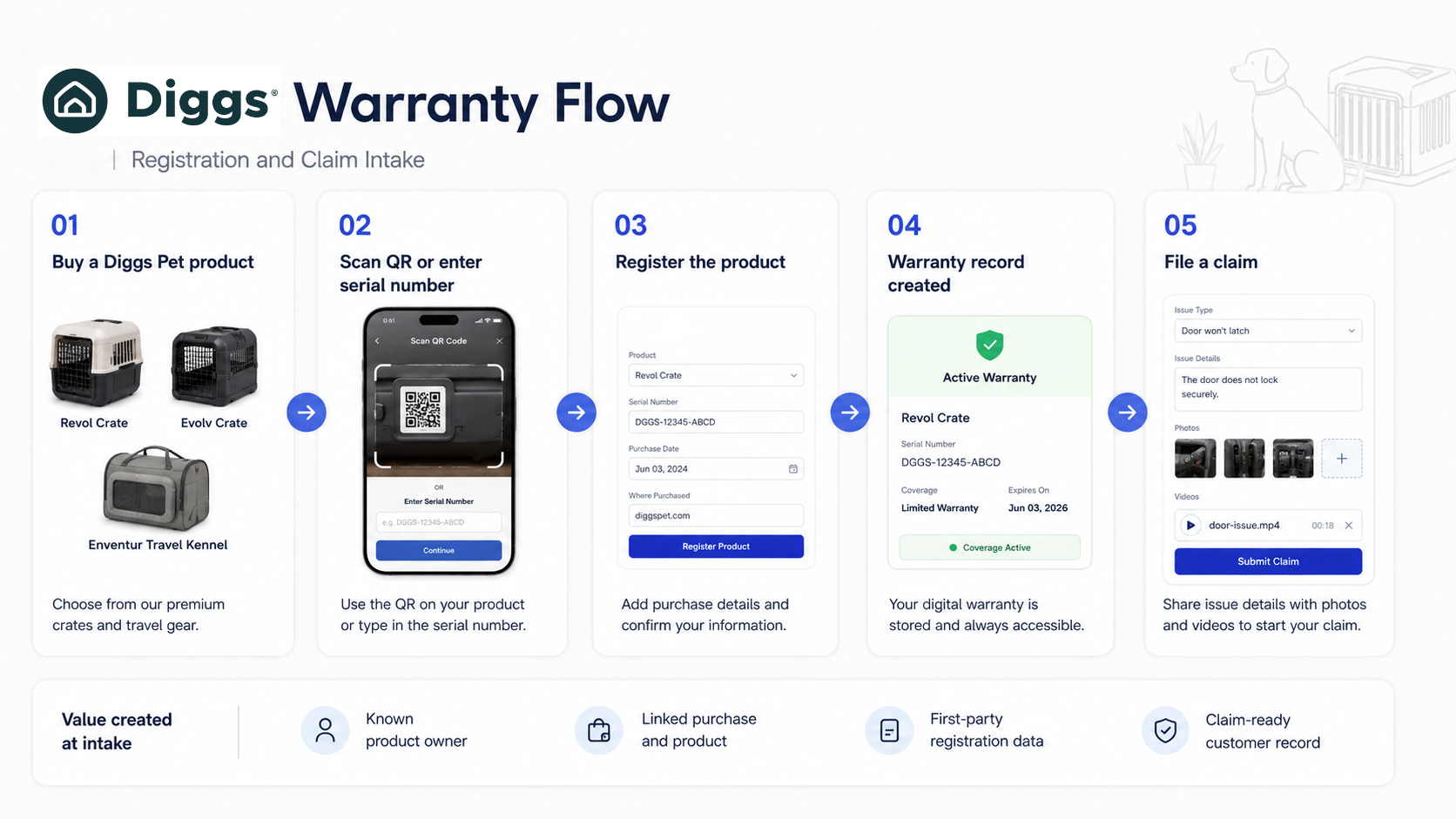
Dyrect gave Diggs a single system that connects product registration, claim submission (https://www.diggs.pet/pages/warranty-claim) , media review, repair and replacement tracking, and customer communication. Here is how each piece works.
Every Customer Registers Through One Branded Flow
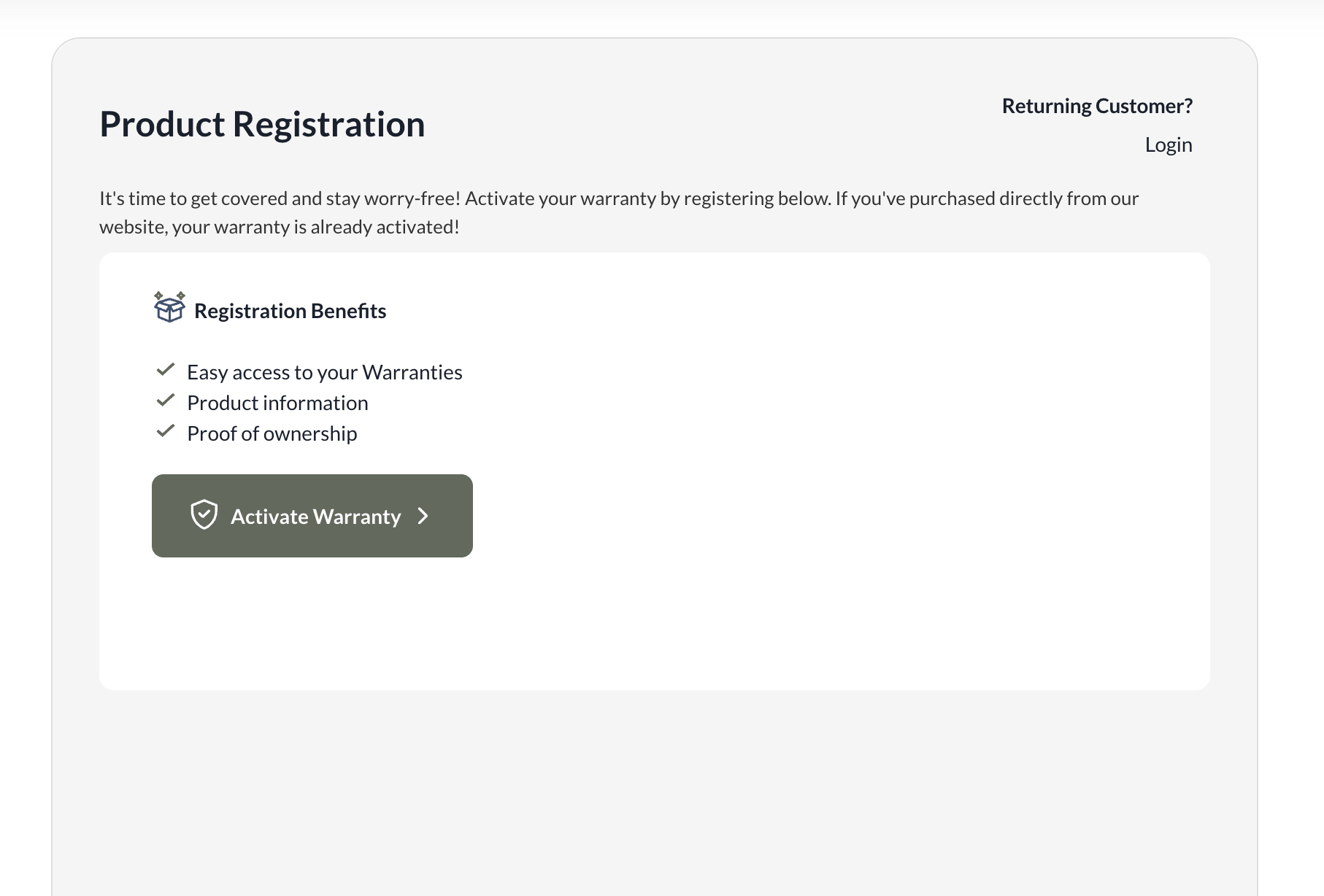
Whether a customer buys on Shopify, through a retail partner, or from a marketplace, they register their product (https://www.diggs.pet/pages/registration-warranty) by scanning a QR code on the packaging. The scan identifies the product, confirms the purchase channel, creates a warranty record, and delivers a digital warranty certificate to the customer.
This step alone changed something fundamental. Before Dyrect, Diggs had no idea who owned their products after the sale. Retail and marketplace buyers were completely invisible. Now, every registration builds a first-party customer record that Diggs owns, regardless of where the product was purchased.
In six months, this flow captured 66,000+ registrations.
Customers Submit Claims With Full Context Attached
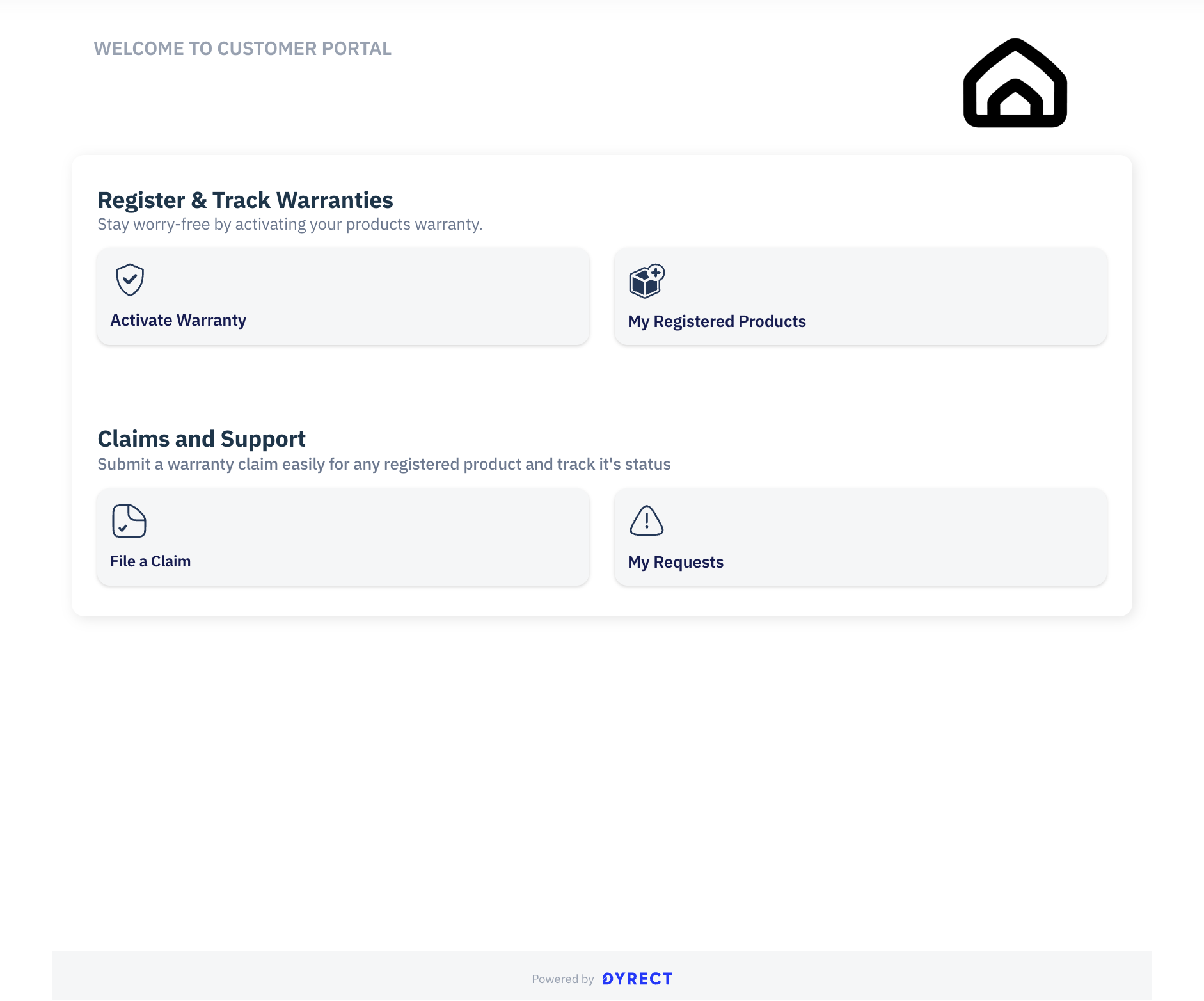
When a registered customer has an issue, they submit a claim through a branded portal. The portal already knows which product they own, when they bought it, and whether it is under warranty. The customer adds a description, uploads photos or videos, and submits.
From the customer's side, this takes a few minutes. From the agent's side, the claim arrives with everything attached. No email chains asking for order numbers. No switching to Shopify to verify purchases. No hunting through inboxes for photos the customer sent three days ago.
Agents Review, Route, and Resolve From One Dashboard
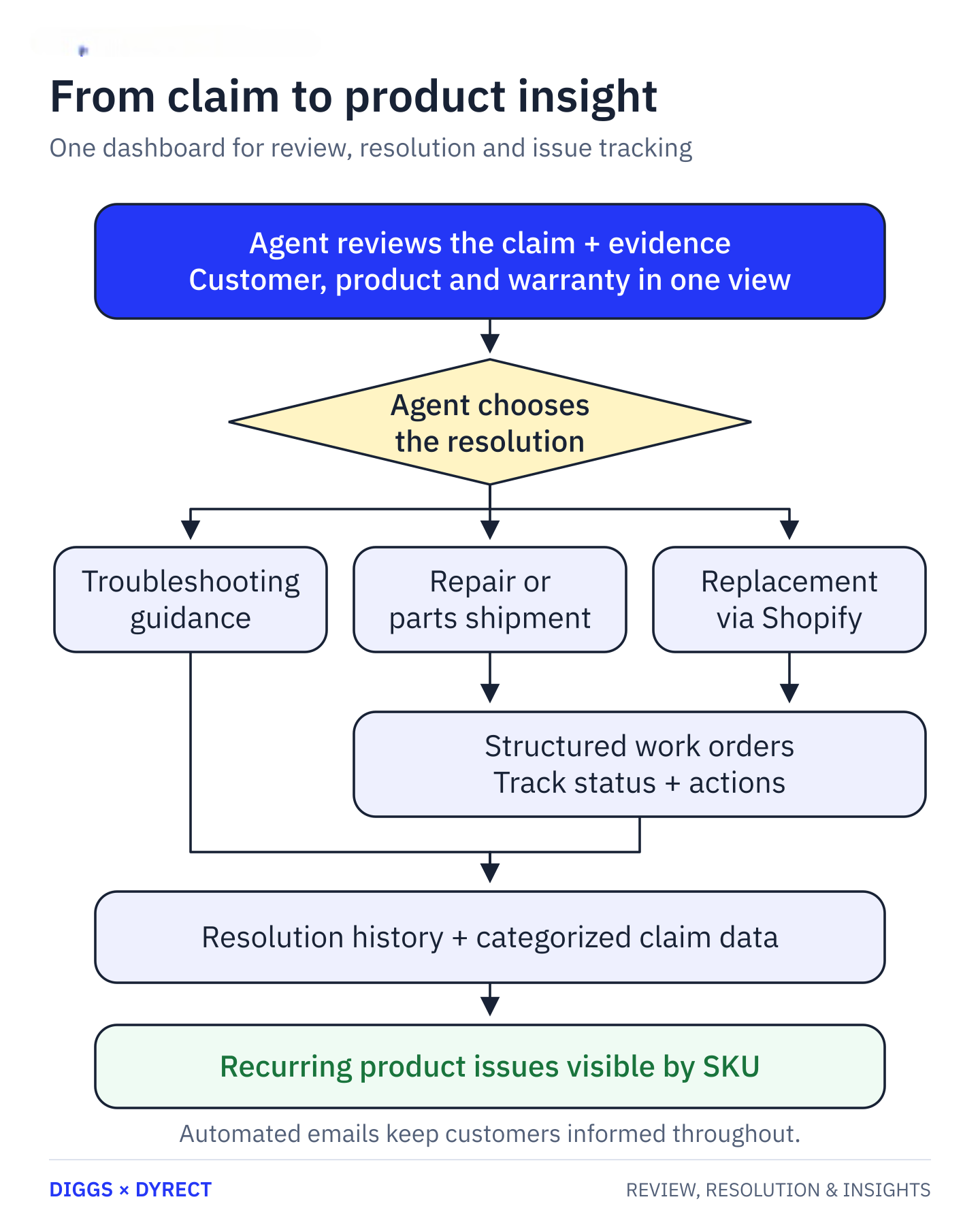
Every claim lands in a single dashboard with product details, customer information, uploaded media, warranty status, and resolution history visible together.
The agent can review the evidence, decide whether the claim qualifies for repair, replacement, or troubleshooting, and move it forward without leaving the screen. If a replacement is needed, the workflow connects directly to Shopify, so the agent does not need to manually create a new order in a separate system.
This is the step that eliminated the constant tab-switching. Instead of reconstructing context from five sources, the agent sees everything in one view and makes a decision.
Repairs and Replacements Follow Structured Work Orders
Approved claims move into work orders. Each work order tracks the resolution type (repair, replacement, or parts shipment), the current status, and the full history of actions taken.
For Diggs, this meant the operations team could see exactly which claims were waiting for parts, which were in transit, and which were resolved. The support team could answer customer questions about status without asking operations for an update.
Every Claim Gets Categorized, and Patterns Become Visible
Here is where warranty data turns into product intelligence.
Every claim is tagged with a category: design-related issue, manufacturing defect, shipping damage, pet damage, missing parts, cracked tray, or other. Over time, these categories build a clear picture of what is actually happening with products in the field.
If cracked trays start showing up at a higher rate for a specific SKU, that signal is visible in the dashboard. If shipping damage spikes after switching to a new fulfillment partner, the data shows it. Before Dyrect, these patterns were buried in individual Zendesk tickets where nobody could connect the dots.
What Changed After Six Months
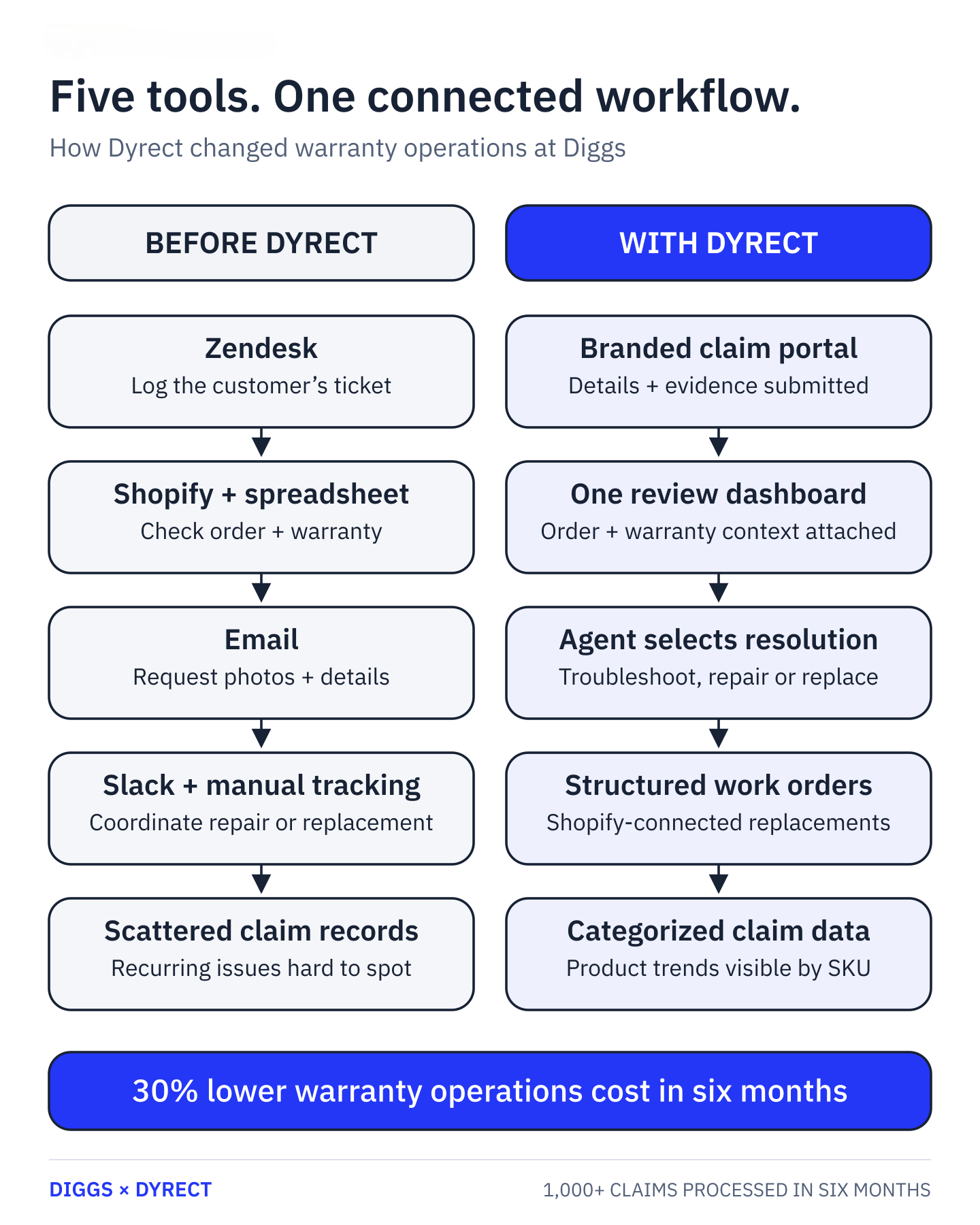
Before Dyrect, a single warranty claim required an agent to check Zendesk, Shopify, a spreadsheet, email, and Slack before they could even assess the issue. Customers waited days for responses because verification took multiple rounds of back-and-forth. The operations team tracked repairs and replacements manually. And product issues only surfaced when someone happened to notice the same complaint showing up repeatedly.
After Dyrect, the same claim arrives pre-verified with product data, customer data, and uploaded evidence in one view. The agent reviews and routes it from a single dashboard. Replacements connect directly to Shopify. Work orders track every resolution step. And claim categories automatically surface product trends.
The numbers tell the story clearly.
- 66,000+ warranty registrations captured in six months
- 1,000+ warranty claims processed through structured workflows
- 30% reduction in warranty operations cost
- Structured issue tracking across design, manufacturing, shipping, and damage categories
- First-party customer data from Shopify, retail, and marketplace buyers in one system
About Dyrect
Dyrect is warranty infrastructure for product brands. 550+ brands use it to run registration, claims, repairs, replacements, and customer communication from one platform instead of duct-taping Zendesk, spreadsheets, and email together.
Brands on Dyrect resolve claims 50% faster and register 3x more customers. Dyrect AI (currently in beta) already handles most routine warranty interactions without a human touching the ticket.