
How The Indus Valley Manages Warranties for 20 Lakh+ Customers From One Portal
The Indus Valley uses Dyrect to let customers register products, manage warranties, file claims, and track requests through one branded portal.
"Our customers don't buy one pan. They build a kitchen with us over years. This is the first thing we've had that treats it that way. Everything they own in one place, with the coverage already switched on."
TL;DR
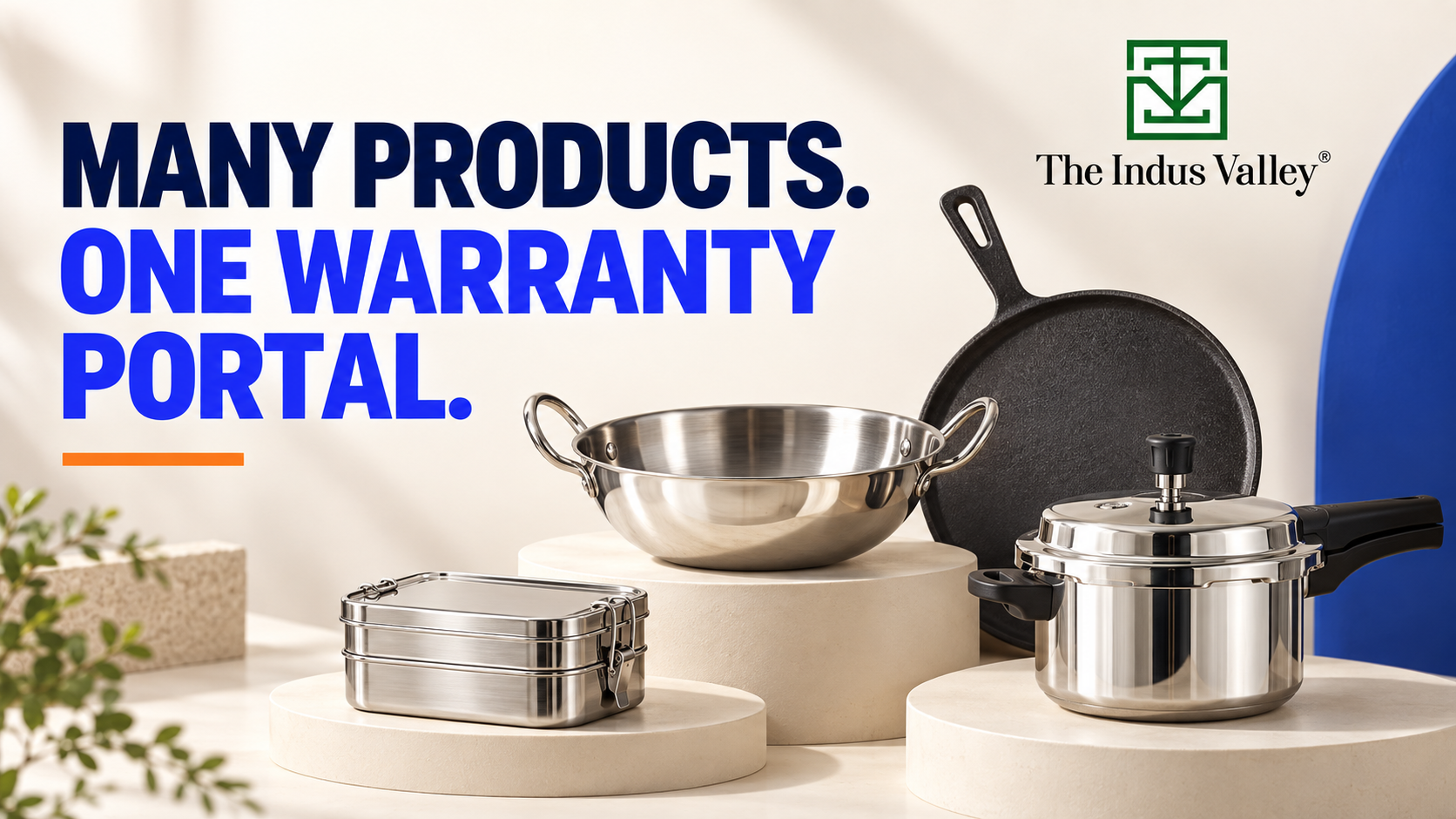
- The Indus Valley is India's leading toxin-free cookware brand with 20 lakh+ customers and 300+ products across cast iron, tri-ply, stainless steel, enamel, pressure cookers, drinkware, and lunch boxes.
- Before Dyrect, warranty proof lived in old order emails. Customers had no way to see what they owned, no way to file claims without back-and-forth emails, and no way to check where their request stood.
- After switching to Dyrect, The Indus Valley launched a branded portal where customers register products, see all their warranties, file claims, and track everything themselves without sending a single email.
About The Indus Valley
The Indus Valley makes 100% toxin-free cookware for Indian kitchens. The brand started after co-founders Madhumitha Uday Kumar and Jagadeesh Kumar had a bad experience with plastic cookware in an oven. That one incident pushed them to build a company around safer alternatives.
Today they sell over 300 products. Cast iron, tri-ply stainless steel, tri-steel, sheet iron, enamel cast iron, tri-ply ceramic, pressure cookers, drinkware, lunch boxes. Everything is chemical-free and built for daily Indian cooking.
The brand has scaled to over 20 lakh happy customers across 15,000+ pin codes. Inc42 named them one of India's fastest-growing D2C companies. YourStory featured them in the 500 Challenger Brands list. FICCI awarded them Best Ecommerce Startup 2021. TiECon Chennai gave them Start-up of the Year 2022.
Their goal is 100 million Indian kitchens. At that scale, warranty is not a back-office task. It is a core part of how customers experience the brand.
A Cookware Brand Where Every Customer Owns Multiple Products
Most brands deal with one product per customer. The Indus Valley does not work that way.
A customer starts with a cast iron tawa. A few months later, they come back for a tri-ply kadai. Then a pressure cooker. Then a set of lunch boxes. Over a year or two, they end up with five, six, sometimes ten products from the same brand.
That buying pattern is great for business. But it created a warranty problem that kept getting worse. Every product had its own warranty, confirmed through its own order email. Nothing connected them. There was no shared view of what a customer owned or what was still covered.
Six Things That Broke as the Brand Scaled
Warranty proof was buried in inboxes. A customer who bought five products over two years had five separate order confirmation emails as their only record. Finding the right one from eight months ago was nobody's idea of a good experience.
Registration did not exist. There was no system for customers to register what they bought. The brand had no idea who owned what after a sale.
Customers had to ask support what they owned. No self-serve way to check "here are all my Indus Valley products, and here is what is still covered." Every such question became a support ticket.
Claims ran on email threads. A chipped enamel coating, a loose handle, a missing lid. The customer would email in. The team would ask for the order number, ask for photos, verify the product, check warranty. Multiple rounds before anyone could even assess the issue.
Status updates needed a human every time. Every "where is my request?" question required someone to look it up and type a reply.
The warranty page was a dead end. It explained the policy in words. But it could not register a product, accept a claim, or show a customer their coverage. A page that ended conversations instead of starting them.
What The Indus Valley Actually Needed
The support team was not the problem. They were doing their best with tools never designed for warranty.
The brand needed four things.
- A place where customers can see every product they own, with warranty status attached.
- A way to file claims without email threads.
- Self-serve tracking so "where is my request?" stops being a support ticket.
- A warranty page that actually does something instead of just explaining a policy.
How Dyrect Replaced a Static Warranty Page With a Working Portal
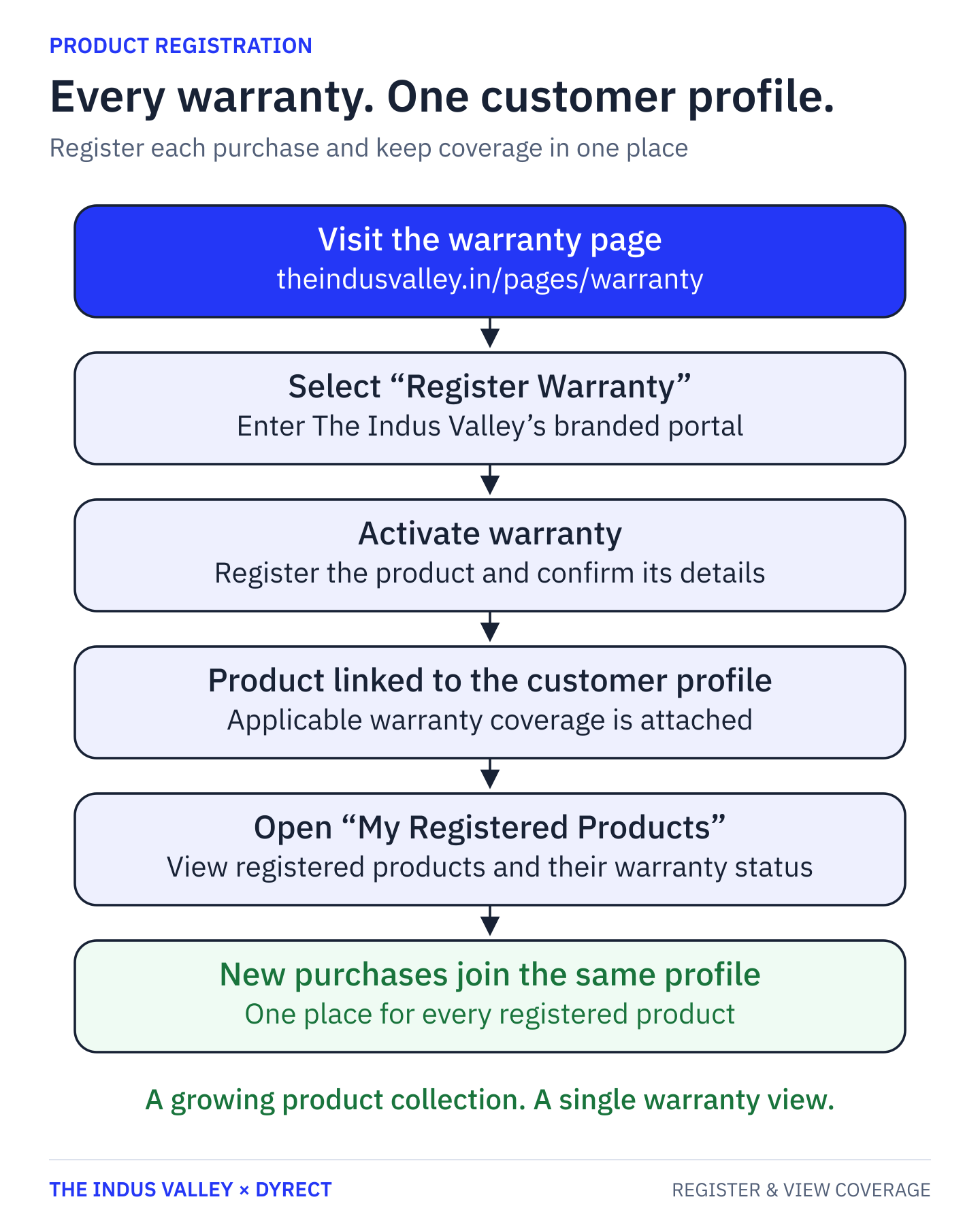
Dyrect gave The Indus Valley a branded warranty hub at theindusvalley.in/pages/warranty. The old wall-of-text policy page is gone. Customers now land on a screen that says "Your Trust Deserves Extra Care" with two clear buttons. Register a warranty, or raise a service request.
Both lead to The Indus Valley's own branded portal at theindusvalley.dyrect.co. It looks like part of their website, not a third-party tool. Here is what each button opens up.
Register Warranty takes customers through product activation. The system confirms the product, attaches coverage, and adds it to the customer's profile alongside everything they have registered before. Every new purchase builds on the same profile. Over time, the brand gets a complete picture of each customer's kitchen instead of knowing nothing after the sale.
Raise Service Request takes customers to a structured form. The system already knows which products they own and whether warranty applies. The customer describes the issue, uploads a photo if needed, and submits. No order number hunting. No email back-and-forth. No verification delays.
After submitting, customers track their request status under "My Requests" anytime they want. The brand measured this specifically. Zero emails needed for a customer to check where their claim stands.
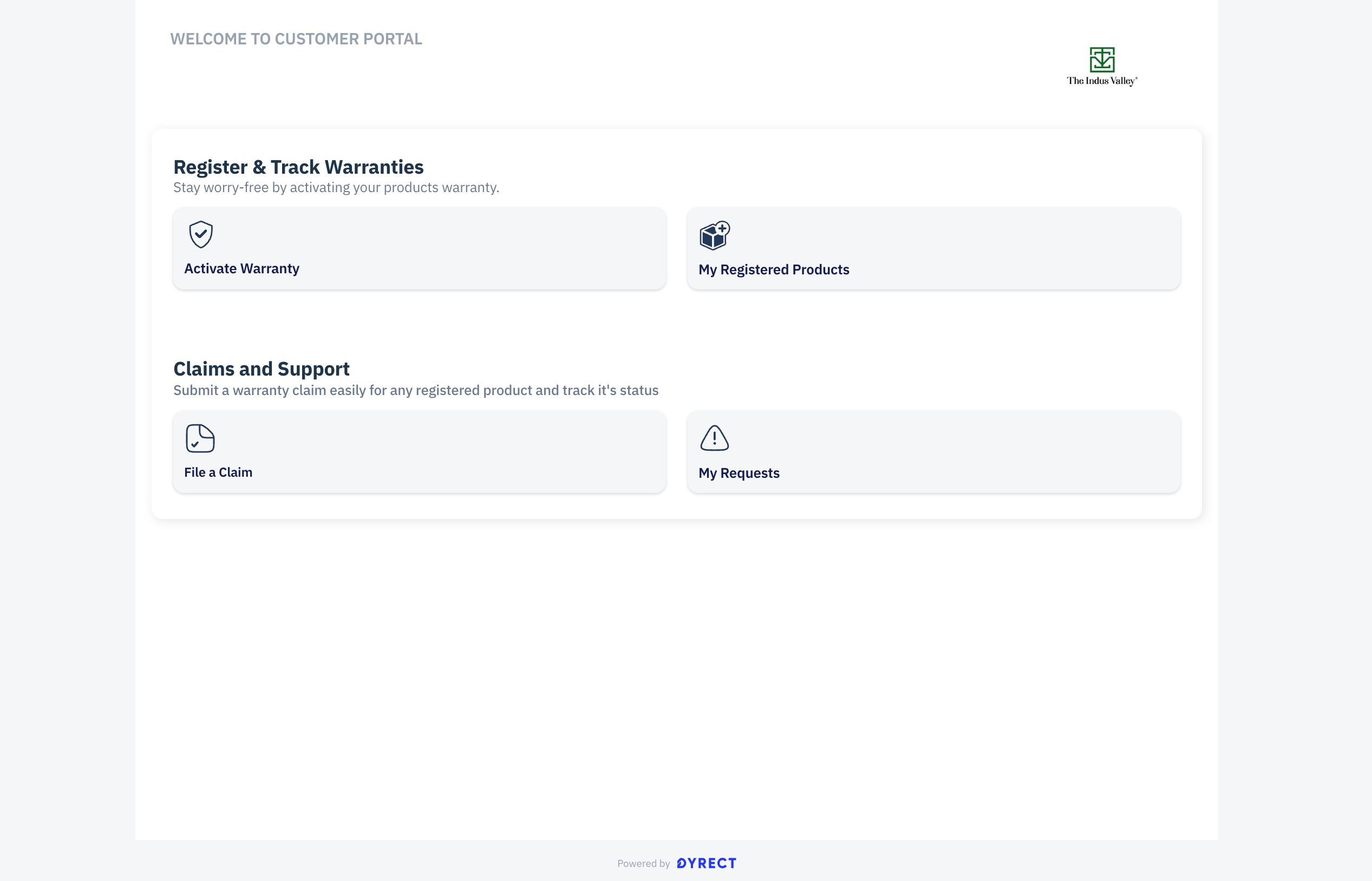
The portal itself shows four tiles on one screen. [Activate Warranty. My Registered Products. File a Claim. My Requests.]
A customer who bought a tawa, a kadai, a pressure cooker, and drinkware over the past year sees all four products here, with warranty status attached to each one.
This screen did not exist before Dyrect.
What Changed
Warranty Registration: Before Dyrect, customers had to dig through old order emails just to prove they bought something. Now they scan a QR code, and registration happens in seconds. Digital, instant, done.
Customer Data: The brand had no idea who owned what. Purchase info was scattered across emails and spreadsheets with no way to connect it. Now every registration feeds into one centralized dashboard automatically.
Service Requests: Customers used to call in, wait on hold, and explain their problem over multiple emails. Now they open the portal, pick their product, describe the issue, and submit. No back-and-forth needed.
Product Coverage: The old warranty page explained policy in paragraphs but could not actually do anything. Now there is a dedicated warranty hub where customers see exactly which products are covered and for how long.
Customer Experience: Everything was frustrating, slow, and required support for every small question. Now customers manage warranties, file claims, and check status themselves from one portal. Zero emails needed.
Results
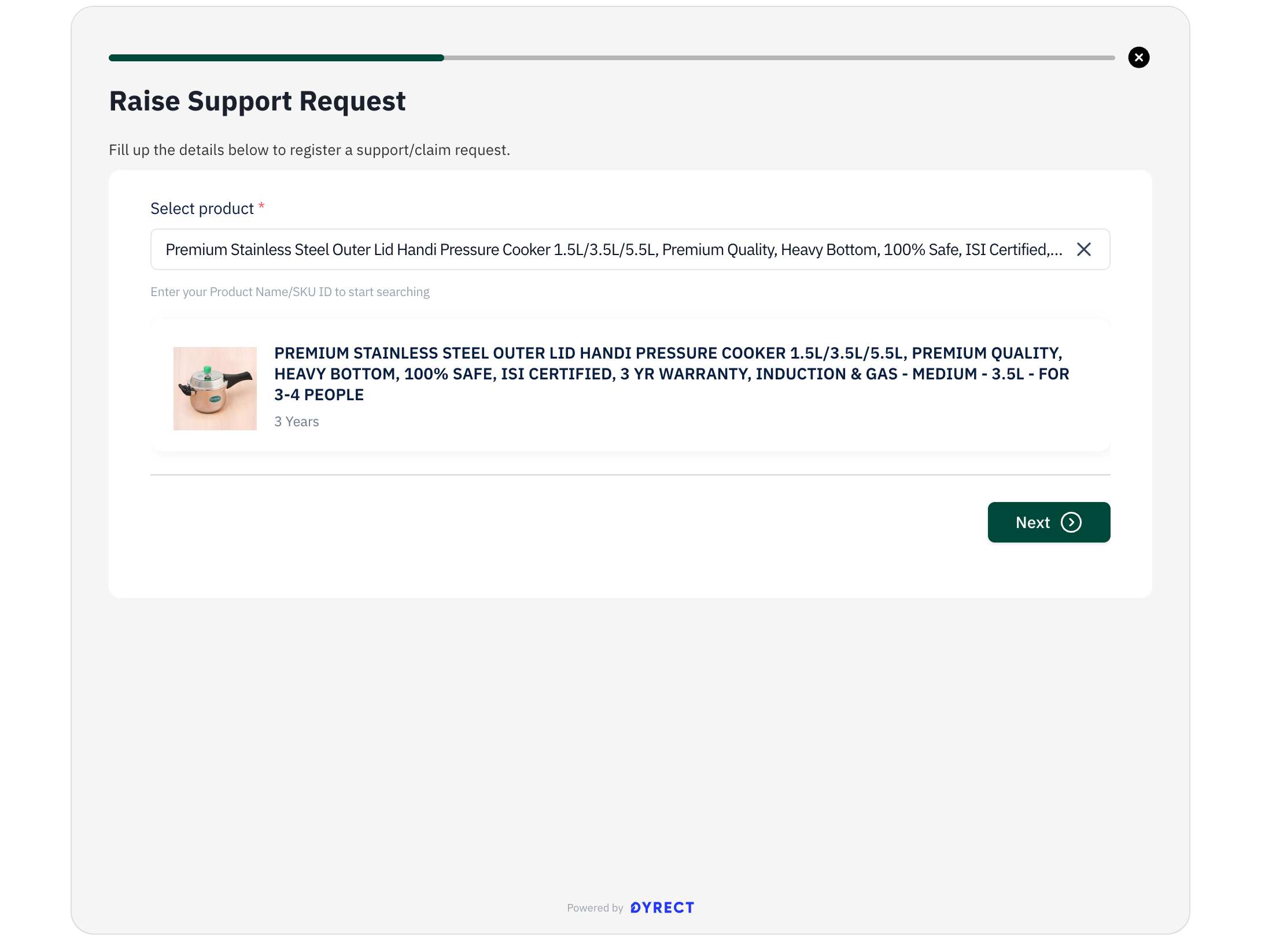
For customers, everything got simpler. They see every product they own on one screen. Warranty status is visible at a glance. Filing a claim takes minutes. Checking status is self-serve. A customer who bought their first tawa three years ago and added a pressure cooker last week manages both from the same place.
For the support team, the repetitive work disappeared. Claims arrive attached to a confirmed product, so agents skip the "send me your order number" step. Service requests come through structured forms instead of freeform emails. And the "where is my request?" messages that used to fill the inbox have mostly stopped.
For the brand, every warranty registration now creates a customer record The Indus Valley owns. That is the start of a real post-purchase relationship. The portal also gives The Indus Valley a genuine reason to bring customers back after the sale. Not with a marketing email. With something actually useful.
Why This is Crucial for Brands With Repeat Buyers
The Indus Valley's problem is not unique to cookware. Any brand where customers buy multiple products over time faces the same thing. Small appliances, tools, tableware, baby gear, personal care devices.
Most brands deal with this by adding more people to support. Dyrect deals with it by giving the customer a self-serve system that grows with the product catalog, not with ticket volume.
About Dyrect
Dyrect is warranty infrastructure for product brands. Over 550 brands use Dyrect to run product registration, warranty claims, repairs, replacements, and customer communication from one platform.
Brands on Dyrect register 3x more customers, resolve claims 50% faster, and see 10x stronger post-sale engagement.